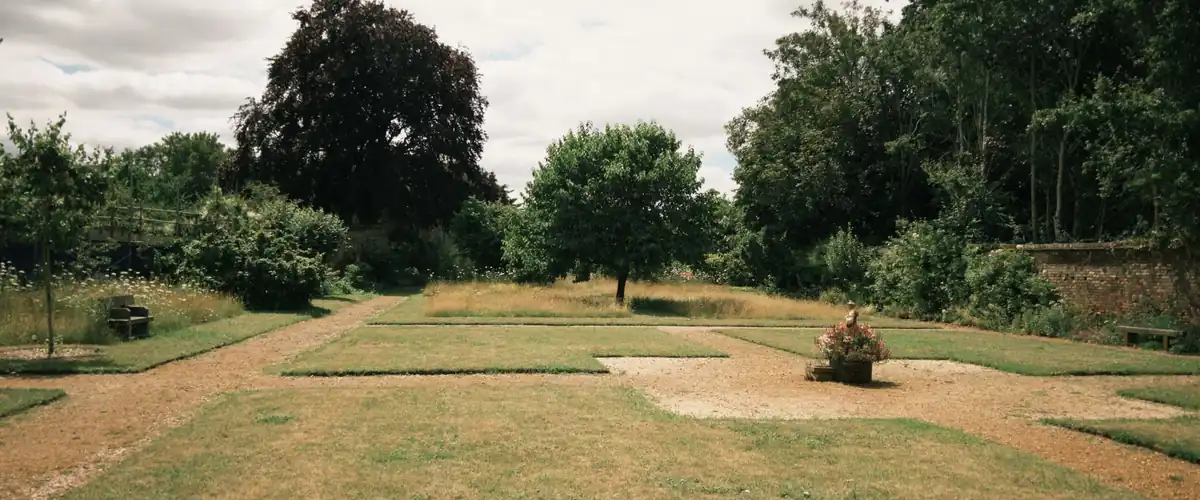
Planning a Garden Project for Your Oxfordshire Home: Why Autumn Is the Time to Start
- Posted by Top Dog Oxfordshire
- On 02 Oct, 2026
- Category : Garden & Landscaping
Most people think about their garden in May, when the light is good and the terrace is in use. By then, the best moment to plan has usually passed. For a garden that looks right next summer, the work starts now: in October, when the borders are fading, the bones of the garden are easy to see and the ground is still warm enough to plant.
This is a short guide to approaching a landscaping project for an Oxfordshire home at this time of year: what to think about first, what can go in the ground before winter, and how to be ready to build in spring.
Start with how you live, not with a planting list
A good garden design begins with questions, not plants. Where do you sit on a summer evening, and where does the sun fall at that time? Where do children or grandchildren play? Do you entertain on a large scale, or is the garden mainly a view from the kitchen? Which paths do people actually walk, as opposed to the ones drawn on a plan?
Autumn is a good season to answer these honestly. The summer is fresh in the memory, the furniture is still out, and you can walk the garden and note what worked and what didn’t. Write it down. A clear brief, even a rough one, saves a great deal of time and money later.
It is also worth looking at the garden from inside the house. In winter you will see it mostly through windows, so a well-placed tree, a clipped evergreen or a lit path can matter more than a summer border.
Let the setting shape the design
Oxfordshire is not one landscape, and a scheme that suits one part of the county can look out of place in another.
- West Oxfordshire. Around Witney, Burford, Minster Lovell and Charlbury, Cotswold stone and dry-stone walling set the tone. Ground on the higher land is often thin and free-draining over limestone, so planting needs to cope with dry summers. Many villages here sit within the Cotswolds National Landscape.
- The Thames valley and the Vale. Closer to the river around Abingdon, Radley and Sutton Courtenay, and in parts of Oxford, heavier soils can stay wet through winter. Drainage and the timing of any groundwork deserve careful thought.
- South Oxfordshire and the Chilterns. Around Henley-on-Thames, Shiplake and Nettlebed, chalk and flint shape both the soil and the walls, and gardens often double as space for summer entertaining.
Period properties in conservation areas, such as North Oxford, Summertown or the older parts of Woodstock, may need consent for some changes to walls, boundaries and trees. It is far better to know this at the planning stage than halfway through a build.
What to do in the ground this autumn
While the design takes shape, the season still offers useful work.
Plant shrubs, hedges and perennials. Soil holds summer warmth into October and early November, and autumn rain does much of the watering. Plants set in now have the winter to establish roots and start growing strongly in spring, with less watering needed through their first summer.
Order bare-root plants. From roughly November to March, hedging, roses and many trees are available bare-root. They are usually better value than container-grown plants and establish well when planted in the dormant season. If a new hedge or avenue is part of the plan, this is the window for it.
Plant spring bulbs. Daffodils and other spring bulbs can go in now. Tulips are traditionally planted a little later, in November, once the soil has cooled.
Renovate or lay lawns. Early autumn is a good time for scarifying, aerating and overseeding, and turf can be laid while the ground is workable and not frozen or waterlogged.
Clear and assess. Cutting back tired growth and lifting overgrown planting shows what you are actually working with: levels, views, failing boundaries, and areas that never quite work. This is often when the real design brief becomes clear.
Our garden maintenance visits can take care of this seasonal work while the larger project is being planned.
Planning over winter, building in spring
Hard landscaping, such as terraces, paths, walls, steps and structures, is generally best built when ground conditions allow, which in much of Oxfordshire means spring rather than the middle of winter. Pouring foundations or laying paving on saturated clay is rarely a good idea.
That makes winter the natural time for design work:
- Survey and measure. Levels, drainage, existing trees, services and boundaries.
- Agree the layout. How spaces connect to the house and to each other.
- Choose materials. Stone, paving and finishes that suit the house and the local setting, seen as samples on site and not only in a brochure.
- Check permissions. Trees in conservation areas or under preservation orders, listed buildings, and anything that affects boundaries or neighbours.
- Plan the planting. What goes in during the dormant season, and what follows once the hard landscaping is complete.
With the design settled by late winter, building can begin as soon as conditions are right, and the garden has the whole of spring and summer to settle in.
One team, from design to upkeep
A garden project often touches more than the garden: new fencing or gates, outdoor lighting, a tree that needs attention before work can start, or a clean-up of the driveway and outbuildings once the build is finished. Coordinating several separate tradespeople is where projects tend to slip.
At Top Dog Oxfordshire, our landscaping and garden design work sits alongside tree surgery, fencing, outdoor security and ongoing garden maintenance, so one team carries the project from first conversation to finished garden and keeps it looking its best afterwards.
If you are thinking about changes for next year, now is the right time to talk. We cover the whole county, from Banbury and Bicester in the north to Didcot and Henley in the south. See all the areas we cover.
Talk to Top Dog Oxfordshire
Tell us about your home and what you would like taken care of. We will come back to you promptly to arrange a visit. No obligation.